
LLM agents और automated QA suites को अब वास्तविक user flows के हिस्से के रूप में “email को handle” करना पड़ता है: signup verification, password resets, magic links, billing notifications, invited-user onboarding, और भी बहुत कुछ। जब email step में समस्या आती है, तो downstream की सभी चीजें अविश्वसनीय हो जाती हैं, खासकर parallel CI में या जब कोई agent actions को retry करता है।
इसीलिए कई teams temp email account बनाने का तरीका खोजती हैं, लेकिन उन्हें वास्तव में consumer-style email account की नहीं बल्कि long-lived credentials की जरूरत नहीं होती। उन्हें एक programmable, disposable inbox primitive चाहिए जिसे agent on demand create कर सके, deterministically wait कर सके, और structured data के रूप में पढ़ सके।
यह गाइड बताता है कि LLM agents और QA के लिए “temp email account” का क्या मतलब होना चाहिए, इसे stable बनाने के लिए design requirements क्या हैं, और Mailhook के programmable temp inboxes का उपयोग करके एक clean implementation pattern।
LLM agents के लिए “temp email account बनाना” का क्या मतलब होना चाहिए
Automation में, “account” शब्द का अर्थ अस्पष्ट है। एक typical email account का मतलब है:
- Human login (username, password, MFA)
- Long-term ownership
- Mail client protocols (IMAP/SMTP) और UI-centric HTML bodies
- समय के साथ ongoing inbox history और noise
LLM agents और QA के लिए, ये properties आमतौर पर नुकसानदायक होती हैं। इसके बजाय, आप चाहते हैं:
- API के जरिए inbox create करना, प्रति run, प्रति test, या प्रति agent job
- छोटा lifecycle (minutes या hours, months नहीं)
- Deterministic retrieval semantics (polling या webhooks)
- Structured output (JSON) ताकि agent reliably parse कर सके
अगर आप distinction की deeper mental model चाहते हैं, तो RFC 5322 जैसे message formats के लिए RFC context देखें (जब आपको headers और message identity के बारे में सोचना हो तो उपयोगी)।
Agent-ready temp inbox के लिए reliability requirements
Zyादातर email-driven flakes mismatched assumptions से आते हैं: tests “5 seconds sleep” करते हैं और उम्मीद करते हैं कि message पहुंच गया, agents HTML scrape करते हैं, inboxes runs में shared होते हैं, या retries duplicates create करते हैं जो new state के रूप में interpret होते हैं।
एक automation-grade temp email approach को इन reliability properties को satisfy करना चाहिए।
| Requirement | LLM agents के लिए क्यों महत्वपूर्ण | Solution में क्या देखना चाहिए |
|---|---|---|
| Isolation | Cross-test collisions और accidental message matches को रोकता है | हर run/test/job के लिए एक inbox, on demand create |
| Deterministic waiting | Agents को explicit “wait until X or timeout” contract चाहिए, sleeps नहीं | Polling API और/या webhook delivery |
| Structured parsing | Hallucination risk और brittle HTML parsing को कम करता है | Emails JSON में deliver (headers, text, links) |
| Idempotency tolerance | Agents retry करते हैं; CI reruns होते हैं; providers resend करते हैं | Stable message IDs, dedupe strategy, safe “read latest” |
| Observability | Debugging को evidence चाहिए, guesses नहीं | Logs with inbox ID, message IDs, timestamps, raw fields |
| Security boundaries | Email untrusted input है, और webhooks spoof हो सकते हैं | Signed payloads, minimal permissions, safe rendering |
| Domain strategy | Shared vs custom domains में deliverability अलग होती है | Speed के लिए shared domains, realism के लिए custom domain support |
Mailhook इन जरूरतों के आसपास बना है: API के जरिए disposable inbox creation, structured JSON के रूप में emails, webhook notifications, polling, signed payloads, batch processing, और optional custom domains। (Implementation details और exact integration contract के लिए हमेशा Mailhook’s llms.txt refer करें।)
एक simple “temp email account” workflow जो flake नहीं करता
High level पर, एक stable workflow इस प्रकार दिखता है:
- Inbox create करें (प्रति run या agent job unique)
- Signup, invite, या reset के दौरान उस inbox address का उपयोग करें
- Expected email का deterministically wait करें
- Email को structured JSON के रूप में parse करें (rendered HTML नहीं)
- Link या OTP extract करें, फिर flow continue करें
- Inbox को clean up या expire करें
मुख्य बात यह है कि inbox एक correlation boundary है। यह आपको केवल उन messages को retrieve करने के लिए stable handle देता है जो इस single run से belong करते हैं।
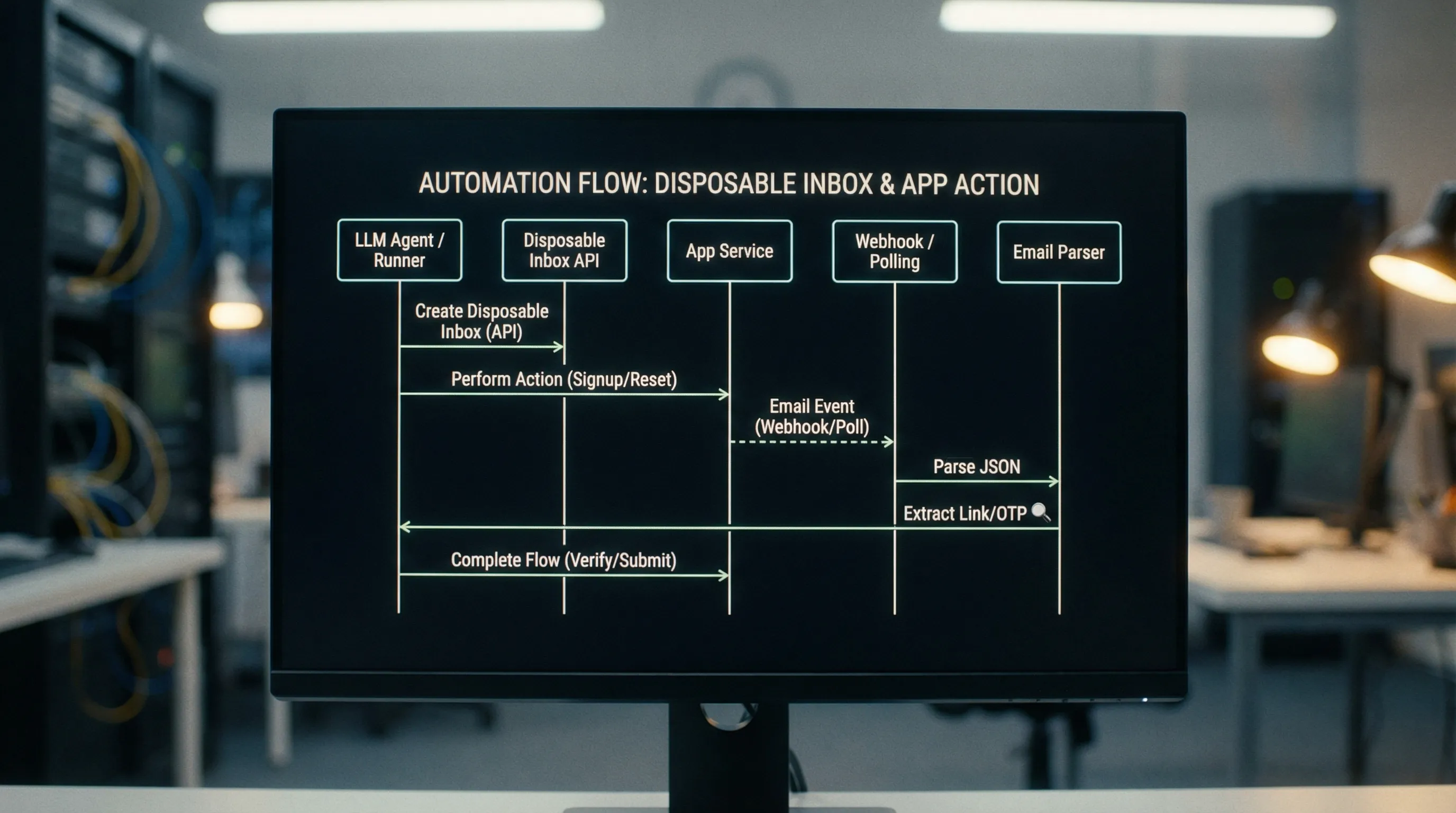
“Eventually” contract: sleeps के बिना waiting
अगर आप इस article से केवल एक idea लेते हैं, तो यह हो: fixed sleeps से बचें।
Email delivery latency variable होती है। Local में pass होने वाला sleep CI में fail हो सकता है (slower environment) या time waste कर सकता है (faster environment)। इसके बजाय, “eventually” rule define करें:
- आप criteria matching करने वाले message का wait कर रहे हैं (subject, sender, tag, या other fields)
- आप poll करते हैं या webhook receive करते हैं जब तक वह arrive नहीं हो जाता
- आप real timeout पर stop करते हैं और actionable debugging output के साथ fail करते हैं
Deterministic wait contract agent tool calls को भी आसान बनाता है: tool “message found” या “timeout” return कर सकता है, और agent decide कर सकता है कि upstream action को retry करना है या नहीं।
Temp inboxes के आसपास LLM agent tools design करना
जब कोई LLM agent task के हिस्से के रूप में email का उपयोग करता है, तो risk केवल flakiness नहीं है। Risk uncontrolled parsing है। आप model को जो देखता है और इसके बारे में कैसे सोचता है उसे constrain करना चाहते हैं।
एक practical pattern narrow set of tools (functions) expose करना है जो structured fields return करते हैं, उदाहरण के लिए:
-
create_inbox()-> returns{ inbox_id, email_address } -
wait_for_message(inbox_id, filters, timeout_ms)-> returns{ message_id, received_at, subject, from, text, html, headers }(या reduced subset) -
extract_verification_artifact(message)-> returns{ otp }या{ url }
Agent को “inbox browse” करने देने के बजाय, आप उसे explicit inputs/outputs के साथ controlled interface दे रहे हैं। यह common LLM safety guidance के साथ aligned है: untrusted context को minimize करें और tool results को structured रखें।
Parsing guidance: presentation नहीं, intent पर assert करें
QA और agents के लिए, stable intent signals को prefer करें:
- Verification URL जिसमें token शामिल हो
- Known length/pattern का OTP
- Dedupe के लिए
Message-IDजैसा header - Text में semantic marker (उदाहरण “Your verification code is: 123456”)
CSS, layout, या pixel-perfect HTML पर depend करने वाले assertions से बचें। HTML humans के लिए है। आपके automation को जब possible हो तो text और metadata पर rely करना चाहिए।
Scale पर QA: parallel CI, retries, और duplicates
जब आप parallel में 50 या 500 tests run करते हैं, तो “shared inbox” approaches टूटने लगते हैं। दो tests similar emails receive करते हैं, फिर naive selector गलत वाला grab कर लेता है।
CI में “temp email account बनाने” को scale करने के लिए, इन operational rules को adopt करें।
हर test के लिए एक inbox का उपयोग करें (या हर test run के लिए)
Isolation सबसे simple concurrency control है। Local part में uniqueness encode करने के बजाय (जैसे [email protected]) और उम्मीद करने कि system इसे preserve करे, हर test के लिए brand-new inbox identity generate करें।
Retries और resends के लिए plan करें
Email systems resend करते हैं। Tests retry करते हैं। Agents steps repeat करते हैं। आपके harness को चाहिए:
- Idempotent matching को prefer करना (उदाहरण “inbox creation time के बाद से first message”)
- जब available हो तो stable identifiers का उपयोग करके duplicates को ignore करना
- Timeout और polling interval को explicit रखना ताकि failures reproducible हों
सही debugging artifacts को log करें
जब email verification fail होता है, तो आप जानना चाहते हैं कि यह था:
- कोई message send नहीं हुआ
- Message send हुआ लेकिन timeout से ज्यादा delayed
- Message receive हुआ लेकिन parsing fail
- Message receive हुआ लेकिन गलत message select हुआ
Yakeen करें कि आप log करें:
- Inbox ID और address
- Exact filters used (subject/sender/time window)
- Wait window के भीतर receive हुए message IDs की list
- Extracted artifact (अगर sensitive है तो redacted)
Yah evidence flaky email test को fixable engineering issue में turn करता है।
Webhooks vs polling: delivery strategy choose करना
Donों patterns अच्छी तरह काम कर सकते हैं। सही choice आपके infrastructure और real-time behavior की जरूरत पर depend करती है।
| Approach | Strengths | Tradeoffs | Best for |
|---|---|---|---|
| Webhooks | Fast, event-driven, fewer API calls | Reachable endpoint और signature verification की जरूरत | Production-like automations, agent event buses |
| Polling | किसी भी environment में implement करना simple | Slower हो सकता है और ज्यादा chatty | CI jobs, local dev, constrained networks |
Mailhook दोनों को support करता है: real-time webhook notifications और emails के लिए polling API। Webhooks के लिए, signed payloads की verification को prioritize करें (Mailhook security के लिए signed payloads provide करता है)। Shared environments में webhooks use करते हैं तो यह non-negotiable है।
Domain strategy: shared domains vs custom domains
Deliverability और realism use case के हिसाब से अलग होती है।
- Shared domains speed और convenience के लिए बेहतरीन हैं, खासकर QA में जहां आप DNS manage नहीं करना चाहते।
- Custom domains helpful हैं जब आपको closer-to-production behavior, domain allowlisting, या internal policies के साथ alignment की जरूरत हो।
Mailhook instant shared domains और custom domain support दोनों को support करता है, जो आपको workflow के लिए सही tradeoff choose करने देता है।
Security और safety: email को untrusted input मानें
Email default रूप से adversarial medium है। Testing में भी, accidentally real emails को forward करना या third-party systems से malicious HTML ingest करना easy है।
Ek practical baseline:
- Browser-like environment में HTML render करने के बजाय structured JSON fields को prefer करें
- Email content से scripts को कभी execute न करें (agent consumption के लिए HTML को sanitize या strip करें)
- Events को process करने से पहले webhook signatures (signed payloads) को verify करें
- जब जरूरत न हो तो full message bodies के retention और storage को minimize करें
- Logs में sensitive tokens को redact करें
अगर आपका agent external recipients को emails trigger कर सकता है, तो abuse prevent करने के लिए clear guardrails भी place करें। Disposable inboxes को legitimate testing, QA, और agent workflows को support करना चाहिए, evasion या spam को नहीं।
Mailhook के साथ pattern implement करना (बिना guessing)
Mailhook की product surface intentionally straightforward है: आप API के जरिए disposable inboxes create करते हैं, फिर received emails को structured JSON के रूप में retrieve करते हैं। आप real time में webhooks के जरिए notify हो सकते हैं, या messages के लिए poll कर सकते हैं। Multiple messages को efficiently fetch और process करने वाले workflows के लिए batch email processing भी है।
क्योंकि API details समय के साथ change हो सकते हैं, सबसे reliable integration reference Mailhook’s llms.txt में official contract है। इसका उपयोग अपने agent framework (OpenAI tools, LangChain tools, custom function calling, या आपका QA harness) के लिए tool wrapper generate करने के लिए करें।
Typical integration plan इस प्रकार दिखता है:
- अपने stack में एक छोटा “mail adapter” service build करें जो Mailhook को wrap करे
- Agents और tests को दो core primitives expose करें:
create_inboxऔरwait_for_message - Common flows के लिए extraction helpers add करें: verification link, magic link, OTP
- केवल वही store करें जिसकी जरूरत है (inbox ID, message ID, extracted artifact)
अगर आप evaluate कर रहे हैं कि approach आपके environment के लिए fit है या नहीं, तो Mailhook बिना credit card के भी start करने की सुविधा offer करता है।

Ship करने से पहले एक quick checklist
अगर आपका goal agents और QA के लिए “temp email account create” करना है और इसे boringly reliable बनाना है, तो अपने implementation में इन items को validate करें:
- Inbox isolation: हर run/test/job के लिए एक inbox
- Deterministic waits: explicit timeout के साथ polling/webhooks, कोई sleeps नहीं
- Structured parsing: HTML scraping नहीं, JSON fields
- Dedupe strategy: retries/resends को safely handle करें
- Observability: inbox IDs, message IDs, और filter criteria को log करें
- Security: webhook signatures को verify करें, email को untrusted मानें
- Domain plan: speed के लिए shared, जब realism चाहिए तो custom
Jab ये pieces जगह पर हैं, तो email आपके pipeline में flaky step नहीं रह जाता और LLM agents और automation के लिए सिर्फ एक और programmable input channel बन जाता है।
Integration को accurately implement करने के लिए, Mailhook’s llms.txt के साथ start करें और inbox primitives को अपने agent tools और QA harness में wire करें।


